Tuesday, May 11, 2021

Vyardor's Seat - Part 1: Terrain, Purpose, and History


    This is part of a series of posts that details parts of my homebrew campaign setting. Initially inspired by Forgotten Realm's Baldur's Gate, Vyardor's Seat is a city full of rival gangs and merchants that struggle for control of the city's economic power, all while evading the wrath of it's ruler; an old and powerful Great Wyrm.


Vyardor's Seat

Part 1: Terrain, Purpose and History


A reference image of a sprawling river city. Art by Tyler Adlin.
Artist: Tyler Edlin


Terrain


    Vyardor's Seat is a sprawling city located across a river. The river itself contains several islets, through which the city has grown to occupy, all the way to the other side of the river. The main part of the city, where the original town was located, lies close to a large forest surrounded by mountains. On the other side of the river are several hills.


Purpose


    The main purpose of the city of Vyardor's Seat, originally, has been that of defense; Primarily by protection of the Ancient Green Wyrm, Vyardorrogroeniix (Vyardor for short), also known as The Viridescent King, after whom the city is named. The people of Vyardor's Seat pay a yearly tribute, and in return, Vyardor ensures the city's protection.

    Vyardor has been so successful, in fact, that many have flocked to this city for safety. This, combined with aggressive yearly tributes and a strategic location, has been the catalyst of a booming economy, making Vyardor's Seat one of the most reliable cities for trading.

    Because the city has had to expand over time, several walls have been made for protection in the past. However, due to the current spread out state of the city, the strategy for defense has been to invest in local mercenary companies as well as militia. These function both as local enforcement and as armed forces used to protect the city from hostile attacks. 

    Because of the city's constant and strong leadership (Very few settlements have survived while also having the same ruler over centuries of time), it has been a staple of stability. And even though crime and corruption is rampant in it's streets, the city's overall direction has always been constant, giving Vyardor's Seat the title of The City of Vision.


History


    Several centuries ago, before Vyardor's Seat was a commercial juggernaut defended by a green dragon, it was just a small port town for travelers going across the river. Then one day, this small town was raided by sahuagin, leaving the already fledgling town defenseless.

    Desperate, the surviving villagers decided on finding a fast way to protect themselves. There were rumors of a Bronze Dragon that lived in the woods nearby, and so the villagers set out to plead the dragon for help.

    The Bronze Dragon that these villagers were seeking was actually Vyardorrogroeniix, a young Green Dragon with a birth defect that caused his scales to look bronze yellow instead of green; it wasn't until several years later that his green scales would appear, giving him the title of Viridescent.

Vyardor agreed to protect the town, with the following conditions:

  1. Every year, the villagers must pay him tribute in gold and treasure; he will establish the amount at the beginning of the year, and the tribute must arrive by the end of the year.
  2. He must be made leader, and given full charge for the defense of the town. The villagers cannot turn to anyone else for protection.
  3. A building must be made just for him to perch on and survey the area, and it must be the tallest building in the settlement at all times. 
    The villagers agreed to his terms, and the small port town eventually grew into a sprawling river city. It would eventually be known by the biggest structure that towers all others, the place where a large green dragon would sit on for everyone to witness it's might. Over time, this tower, and eventually the city, would be known as Vyardor's Seat.

    Though the settlement has seen it's fair share of attacks, Vyardor has always managed to defend it with few resulting civilian casualties, either by mercenaries in his employ or his own efforts. Vyardor has even appropriated or conquered neighboring towns or rival cities, turning his own city into the heart of a kingdom, and as such has fully established his grip of power in the region.

    Over the centuries, Vyardor has raised three sons, each from a different mate. He's delegated responsibilities of the two other biggest cities under his command to his oldest two sons, and he's given Vyardor's Seat to his youngest to watch after while Vyardor, now a powerful dragon in his late stages of life, spends his remaining days in his lair, which is located somewhere in the forest near Vyardor's Seat.


What's next?


    Next time, I'll be expanding more on Vyardor's Seat, including it's technology and it's people.

Sunday, September 15, 2019

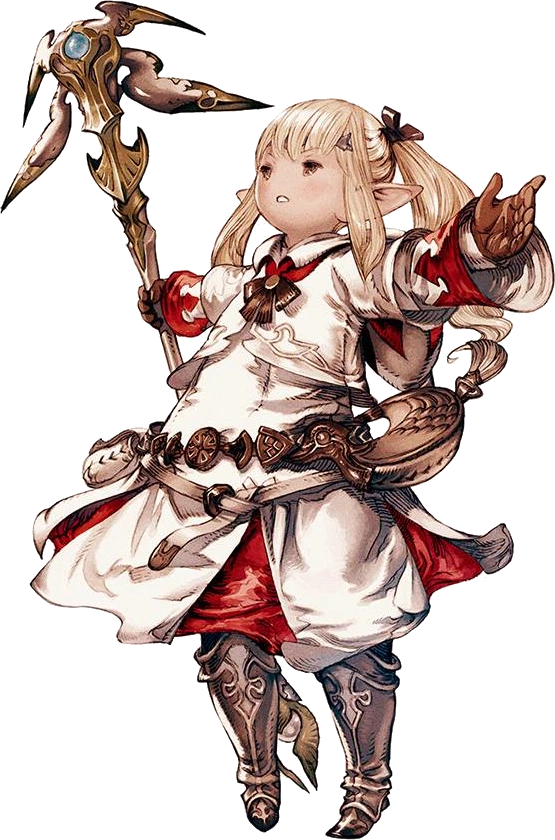
FFXIV x D&D - White Mage as Druid Archetype: Circle of Life

This is part of a series of posts I'm making in prep for a FFXIV x D&D sourcebook I'm writing. Other related articles are:
Here's a copy of the unfinished product if you want to see it in a coherent form: https://homebrewery.naturalcrit.com/share/BkhxYHFIr


White Mage


One of the things that D&D 5th ed. doesn't really have, it's a pure healing subclass. The closest that we have is the Life Domain cleric, which is meant to be next to the action, making attacks of their own. This is probably done as a conscious design choice, as there will often be times when damage is hardly dished out to the PCs, or at least not enough to warrant a "pure healer" in the party. So I went into this subclass with the idea in mind to allow White Mages to do something else besides healing during their turn. 


I initially thought that players that wanted to play a White Mage should just roll a Life Cleric, but after looking at it more, I decided it really wasn't the same, as the Life Cleric has heavy armor proficiency and the Divine Strike feature. Now, this would make for a badass battle White Mage, but that's not really part of the toolkit that White Mage is known for.


I thought of making White Mage into Cleric subclass at first, but the Channel Divinity and Divine Intervention turned me away from it. The cleric really lays on thick that you gain your abilities from a divine entity or power that you revere or pray to in some form. The astrologian can get away with this, because they get their powers from the stars that answer their calls. Sure, FFXIV White Mages have elementals, but.... it's not like the elementals grant them powers themselves.


I considered Sorcerer briefly, and it made a little bit of sense thanks to the idea behind the Padjal, but I ended up dropping it because it didn't feel right. And the sorcerer spell selection clashes with the White Mage way too much.


A gut feeling told me to look into Druid from the beginning, but I shrugged it off because Cleric always seemed to be the obvious choice. A White Mage Druid seemed like a scandalous idea at first, but the more I read into it, the more it made sense. They don't wear metal. Their spells are nature based (so they get stone, water, and wind spells that fill their motif). And it wouldn't be far-fetched to think that Kan-E-Senna is capable of transforming into a small animal to secretly check in on what's happening in the Shroud. They're really just missing a few essential healing spells, which is an easy fix.

I thought that maybe a White Mage player isn't interested in the idea of using Wild Shape, and I didn't want anyone to feel like they're playing sub-optimally because they want to stick to playing what they think is a faithful version of the job. So with Divine Seal, I thought it could use the same resource as Wild Shape, and therefore give the player the option to use it instead and never have to worry about Wild Shape. Divine Seal is really strong at the level it's available, since it's a "free" 3rd level spell you get when you're still only casting 1st level spells, and it recharges every short rest! 

I think this balances out at 2nd level because it's an action to cast, so you're not going to do any healing during that turn (or anything else for that matter, since druids don't have any non-spell options in the bonus action department at that level), and it's a concentration spell, so if you get hit at that level, there's a good chance you can lose it! Plus the effect of the spell, though very helpful, it doesn't really break the game. You can't combine it with your own healing spirit, for example.

This ability improves at later levels; you can use it twice per short rest at level 6, more or less around when you're supposed to cast the spell, and at level 10 you can cast it as a bonus action. Because this feature uses the Wild Shape resource as it's base, I used the Circle of the Moon's Wild Shape features as a reference to determine what is expected from an ability that is based on Wild Shape. Because Circle of the Moon's Combat Wild Shape allowed them to use the resource as a bonus action, it made sense for Divine Seal to do the same eventually.

This is where I come back to my earlier point of making sure the healer always has something to do besides healing. While the cleric does this by getting spells that allow them to use their bonus actions to attack while they use Cure Wounds or other restorative spells as their actions, the White Mage does the opposite; They use their bonus actions to heal, and their actions to do something else.

Because they get Secret of the Lily later (and because their healing is already greatly empowered by Divine Seal), I had to balance Tetragrammaton by limiting it in a similar way that the Celestial Warlock did in it's similar feature, in particular when comparing it to the Circle of Dreams feature that also has a pool of dice to heal with.

I was initially just going to have White Mages heal a little for each heal they dole out, but I wanted to include lilies in some way. I figured that a great way for them to keep having healing resources available without breaking the game too much is by letting them replenish their tetragrammaton dice pool, and we see this in action with Secret of the Lily.  

The White Mage's last feature, Temperance, was me trying to give them something really cool that didn't boost healing directly, but still could help in their healing duties. I yanked it right from the Divine Soul sorcerer, because I figured that flight would be extra helpful to stay in harm's way as well as increased mobility for reaching your allies.

I can't finish without mentioning that Divine Seal get unlimited uses at level 20. Compared to Life Domain cleric, who automatically maxes all their heals at level 14 at no action cost, I think the features balance out with each other.

I hope I don't get backlash from basing White Mage off of druids, but it's really what made the most sense to me. And I really like how this turned out. I think the subclass itself is solid; If anything, I could make a few druid spells to help them be a bit more offensive, magic-wise.


Saturday, September 7, 2019

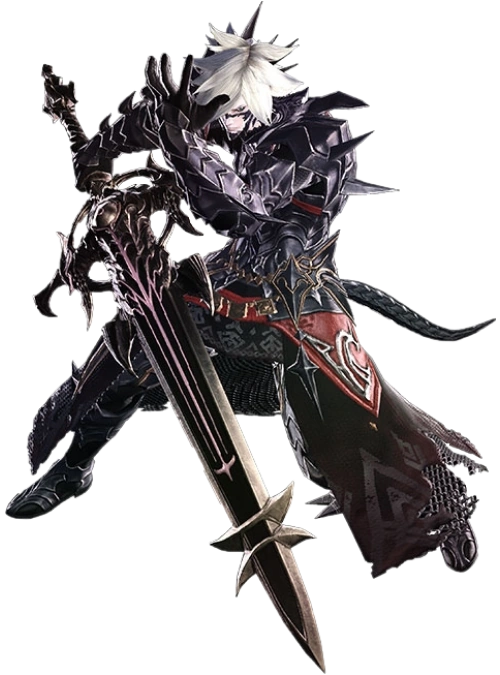
FFXIV x D&D - Warlock Archetype: Dark Knight

This is part of a series of posts I'm making in prep for a FFXIV x D&D sourcebook I'm writing. Other related articles are:
Here's a copy of the unfinished product if you want to see it in a coherent  form: https://homebrewery.naturalcrit.com/share/r1R7P-gUr
Related image


Dark Knight


This week I made the Dark Knight. I was originally going to make it a Paladin subclass, but the more I kept looking into it, the less sense it made. I felt like Dark Knights shouldn't have easy access to healing spells or party buffing auras. There were a lot of things that Paladins had by default that didn't feel right for a Dark Knight. I then considered turning into a Fighter subclass for a while, giving it the Paladin abilities it could use, and then cherry-picking from the wizards' spells. When I noticed that it was difficult for a Fighter subclass to really feel right, I looked to other jobs. And that's when I remembered... the Warlock's Hexblade subclass.


The Hexblade turns the Warlock into a melee fighter; a sort of "dark paladin", if you will. Looking at it now, I probably should have considered doing something similar to the Hexblade from the start, but I didn't think the Hexblade turns the Warlock into enough of a melee fighter to be receiving hits like the Paladin does. So that's my angle with Dark Knight: Take Hexblade, and make it a more martial counterpart of itself, all while molding it into a faithful representation of the FFXIV job. Because Warlock subclasses all have a patron, I named this one The Darkness Within, alluding to the fact that a Dark Knight gains it's powers from one's own darker alter ego.

For the most part, the Hexblade's expanded spell list was on point with what I would have had in mind for Dark Knight. I made some changes to add some more Paladin spells to include in the Warlock's very Dark-Knighty repertoire. I made sure not to include any healing spells on purpose. The most notable additions are Death Ward and Destructive Wave, which gives the Dark Knight more staying power and a powerful AOE, respectively.

I changed the Hexblade's Curse by, first of all, removing it's 19-20 crit chance feature that Champion Fighters (The flagship users of this ability) need to wait two more levels for. Instead of this, I decided to add a few options of Fighting Style, including Spellslinger, a fighting style I made for Red Mage. With the inclusion of the Fighting Style feature, it should help reinforce the Dark Knight as a martial character.

I then continued tweaking Hexblade's Curse further. I removed the ability to heal after making a kill and turned that into an invocation called Blood Weapon, which is essentially Dark Knight's version of the Fighter's Second Wind. Finally, I turned the feature from a curse to a form of rage, so that it may better interact with another feature I cover below, Living Dead. Finally, I toned down the damage bonus of Hexblade's Curse to use a 1d4 (later upgraded to 1d6) instead of a straight proficiency modifier. I called the final product Delirium. I wanted to add something like the Rage's resistance to nonmagical weapon damge, but I felt like I was already giving too much at level 1, and Delirium didn't need to have any restrictions.

I left Hex Warrior largely untouched, and just added Heavy Armor proficiency. I renamed it to Grit.

Image result for final fantasy xiv dark knight
I was originally going to leave Living Shadow as the 14th level ability, but when I decided to include Living Dead, I opted in making a modified version of Hexblade's Accursed Specter instead. Living Shadow allows you to conjure it at will as an action, instead of for free after slaying a foe. The catch is that your Living Shadow stays just long enough for a fight, which Accursed Specter stays for the rest of your adventuring day. Their stats are largely similar, and the way you control Living Shadow is very similar to the Artificer's Iron Defender, which I thought was very intuitive.


The level 10 ability, Dark Missionary, follows the Warlock subclass' pattern of being a defensive feature. They gain proficiency to Constitution saving throws, which not only helps solidify their identity as a martial subclass, but it'll also help them with Living Dead. They also gain a limited version of a Paladin's aura by allowing them to use a reaction to grant themselves and others a bonus to constitution saving throws. 

I initially thought against adding Living Dead to the Dark Knight's repertoire, having them use Death Ward instead, but I figured that the lack of staying power that their d8 hit dice provided, compared to Paladin's d10, and Barbarian's d12, did actually merit a little more help. With their incredible constitution saving throw modifier, as well as the ability to cast Death Ward on themselves, Dark Knights can stay in the front lines for a very long amount of time.

I'm fairly satisfied with the end result. I think it encapsulates the feeling of Dark Knight well, and it looks fun to play. My two concerns with it are giving it three features at level 1 (even though I think they're all balanced) and any action economy issue that the Living Shadow might bring (since it requires a bonus action from you in order to attack, and your smite spells require a bonus action to trigger).


Sunday, September 1, 2019

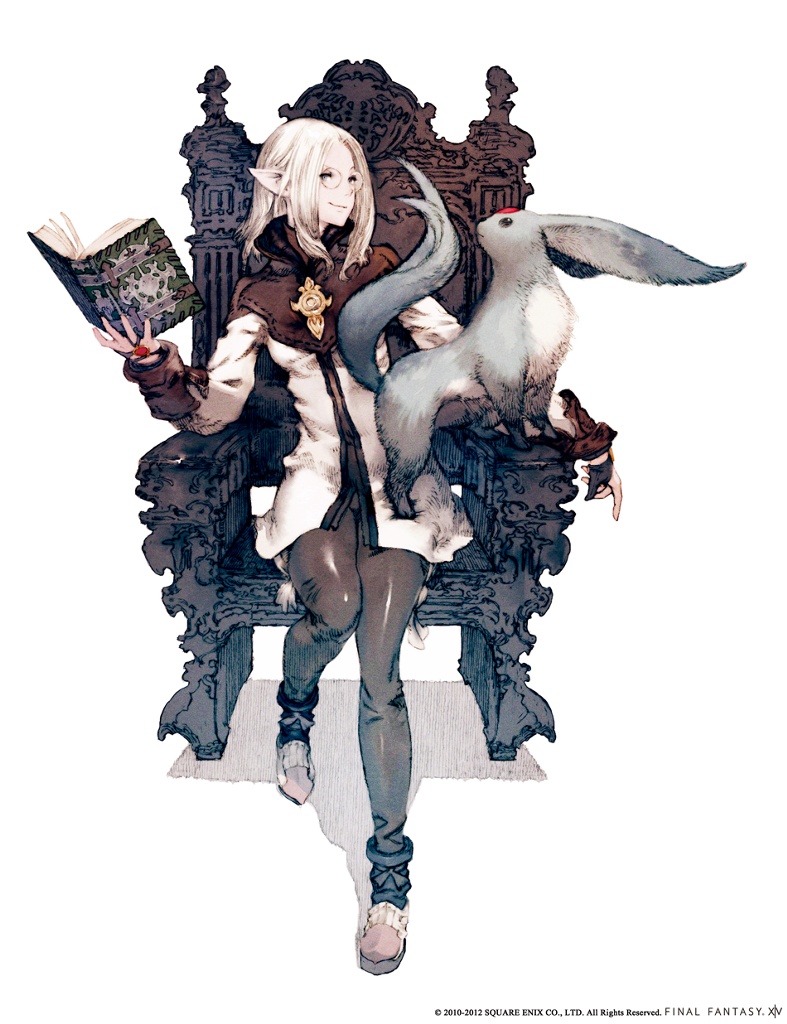
FFXIV x D&D - Wizard Archetype: Scholar

This is part of a series of posts I'm making in prep for a FFXIV x D&D sourcebook I'm writing. Other related articles are:

Here's a copy of the unfinished product if you want to see it in a coherent form: https://homebrewery.naturalcrit.com/share/SJbK-u2ICV

Scholar


The Scholar is one of FFXIV's healing jobs. Their method of healing involves planning, preparation, and prevention. In comparison to their more direct healer counterparts, the scholar has a wide toolkit of ways to keep their party up, often in roundabout ways.

It wasn't too difficult to pick the Wizard as the class to base this archetype upon. After all, it's the only pure spellcaster that uses intelligence as their spellcasting ability modifier. Wizard spells will give the Scholar many options to help and protect their fellow adventurers in and out of combat, with spells such as Magic Weapon and Leomund's Tiny Hut.

I had to be careful, however. Wizards are not commonly known as healers. Knowing that WotC has yet to release a healing Wizard when all other non-healing spellcasters had a healing subclass, I started looking for any reasons that the written class itself might provide, and I found it in the level 18 ability: Spell Mastery.

Spell Mastery grabs one 1st and one 2nd level spell and essentially lets you cast them at will. This immediately spoils any attempts at simply giving the Scholar an expanded spell list with Cure Wounds on it, because having Cure Wounds at will trivializes spending hit dice at a short rest.

Image result for ffxiv scholar officialTherefore, in order to make a healing Wizard, they would have to be able to use Cure Wounds in a different manner...

Originally, Aetherflow was going to be Scholar's Metamagic, usable only for certain healing spells. However, once the realization that the Wizard couldn't just have Cure Wounds dawned, Aetherflow then turned into a resource with which to cast "demi-spells". Through these demi-spells, or Aetherflow Maneuvers, they are able to cast heals with a resource similar to spell slots.

Emergency Tactics allows Scholars to "sacrifice" their spell slots and use them for healing instead. In a tough fight, they'll find their bonus actions occupied as they convert slots in order to heal their allies.

Originally, the Nymian Fairy was going to be a variant familiar, having no spells of it's own and instead healing with spells that you transferred through it. However, after seeing how critical it was going to be for the Scholar's toolkit, I realized the Scholar really couldn't afford the fairy having hit points, and therefore being capable of dying. It would suck that they'd spend aetherflow stacks on this thing, only for it to die a turn later from a stray fireball. Now the fairy is essentially a Spiritual Weapon that heals instead.


Deployment Tactics, partly a remnant of my idea of making this a healing metamagic subclass, this feature allows you to spread a spell's use to one more target than Twinned Spell can.  My logic behind Deployment Tactics being balanced is that, while Twinned Spell works on any spell that targets one creature, and so it can be used offensively, Deployment Tactics can only be used on lower level spells that targets allies. This is a very limited selection of spells, some of which already let you select more targets if you spend higher level spell slots; If anything, this ability allows you to save one high (i.e. 3rd, 4th or 5th) level spell slot and use the subclass's resource instead.


Saturday, August 24, 2019

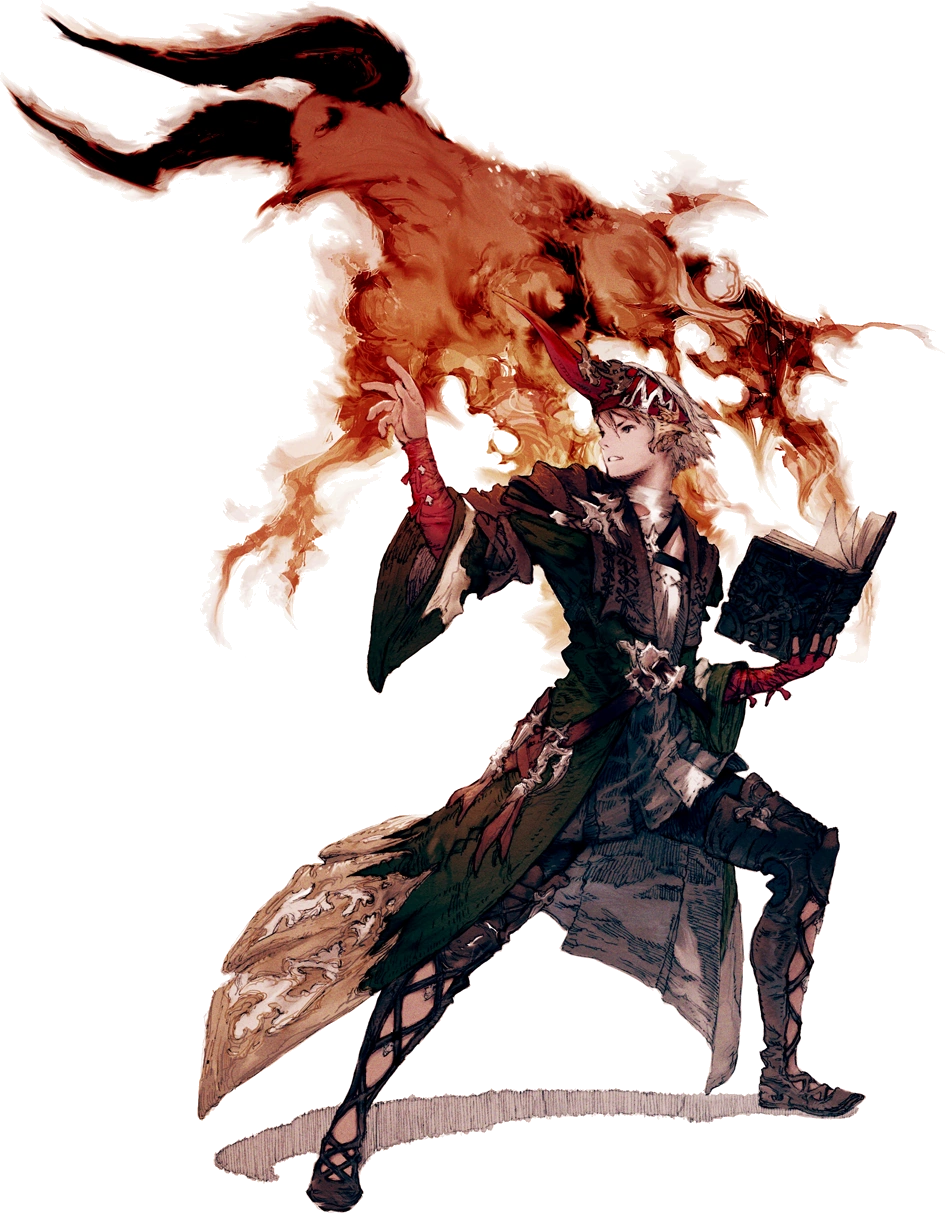
FFXIV x D&D - Wizard Archetype: Summoner

This is part of a series of posts I'm making in prep for a FFXIV x D&D sourcebook I'm writing. Other related articles are:

Here's a copy of the unfinished product if you want to see it in a coherent form: https://homebrewery.naturalcrit.com/share/Bkl_QkcnV

Summoner

Image result for summoner ffxiv


The classic Final Fantasy Summoner job is one of my favorites in the series. The idea behind conjuring entities that are far beyond us, and making them do our bidding for a short time, has always been so enthralling. Their attacks are cinematic, often changing the environment, and the cost for their help steep, but worth it.

I have to admit that I've never been satisfied with the FFXIV representation of the Summoner job. Not only are Egis laughably lackluster, but the direction towards Summoners channeling Bahamut is something that clashes with the job's identity, in my opinion. I always saw Summoners as those who would call and command their summons, not channel or "become" them. As such, My take on the Summoner takes the best parts from it's counterpart, while hearkening to the classic iteration of the job.

In my research for this subclass, I looked to see how official resources handled summoners. The Conjuration Wizard focuses more on teleportation than it does summoning; a pity, since it looks like they've stripped Wizards of their summoning prowess from previous editions and gave it to Cleric and Druid. That's when I decided to make Wizard the base class for Summoner, because it would add something interesting to the class; the other option was Warlock, and maybe I'll do Warlock-Summoner in the future, which would focus on the Dreadwyrm Trance aspect of the job. Sorcerer would have made sense if Summoners were like in previous iterations, where you have to come from a family of Summoners to be one; in FFXIV's case, however, this is not the case.

Besides Conjurer Wizard, the other clear summoning subclass is Circle of the Shepherd Druid. I looked at their features and came up with Resilient Summons, Enkindle, and Focused Conjuration; Most of them are altered versions of other features.


Image result for summoner ffxiv
Next, I focused on making sure that Summoners felt like they were always progressing on abilities that were summoning related, and I looked at their spell list for this. Their first level spells had Find Familiar, so I made a Carbuncle stat block that they can summon with this spell ( I didn't think it was necessary to make Topaz / Ruby / Emerald versions of the Carbuncle. Maybe another time. ). Because Find Familiar is a conjuration spell, it benefits from Resilient Summon's temporary hit points, helping your Carbuncle familiar become a fighting ally at lower levels. I made the Sustain spell for summoners that want to stand back and support their minions.


For the 2nd level spell slots, wizards don't get any good summoning spells. Clerics on the other hand, have a very cool spell called Spiritual Weapon; it summons a spectral weapon that they can use during their bonus actions. Very straightforward. Inspired by this spell, I made the Summon Egi spell, which works essentially just like Spiritual Weapon. I may not be a fan of Egis, but I do think they're a great stepping stone to summoning the actual primals.

For the 3rd level spell slots, I grabbed Spirit Guardians from the Cleric spell list. This spell can be easily flavored to conjure whatever Primal the Summoner wants to conjure that they don't normally have access to.

For the 4th level spell slots, I yoinked Conjure Minor Elementals from the Druid spell list. It already summons elementals, so all I had to do was make stat blocks for Demi-Primals, since it didn't seem quite like it was time to allow the summoning for actual Primals. I only made Demi versions of Ifrit, Garuda, and Titan, but I'd like to make Demi versions of other primals, but in lower CRs so that they can be used when conjuring multiple allies is preferred.

For the 5th level spell slots, I thought that Conjure Elemental was the perfect summoning spell to base the subclass around. Like Conjure Minor Elementals, it already summons elementals, so repurposing currently existing elementals into Ifrit, Titan and Garuda was easy. In the future, I'd like to make new summons for CRs 6, 7, 8, and 9; This way, Summoners will always have something new to add to their repertoire every time they gain a new spell level.


Conjure Elementals, however, has two big limitations. The first one is that they need an area of fire, air, earth, etc. for the spell to work. For this, I made a magic item that could be used to overcome this limitation easily: The Primal Element Crystal. The other "limitation" is that if the Summoner loses concentration, they also lose control of their summon. I like the idea behind this, because it makes Summoners be respectful and careful of their summoning procedures, but I understand how this could become a bit cumbersome. The Focused Conjuration feature certainly helps, but it doesn't stop the Summoner from losing concentration if they, for example, went unconscious. For this purpose, I made a limited version of Dominate Monster called Aetherpact, which only works for creatures you summoned, which gives Summoners another chance at seizing control from their summoned monsters.


For the 14th level feature, Swift Summons, I thought it would be cool if Summoners could use their more powerful summoning spells during battle. I took a page from the Evoker Wizard's Overchannel feature, and allowed Summoners to use this ability multiple times per day, at the cost of gaining exhaustion. I might change it to deal damage instead, if exhaustion isn't enough of a penalty.

Even though I think most of the subclass's features are solid, there is still a lot of work that can be done. More Primals and Demi-Primals can be made. Summoning the Warring Triad, Phoenix or even Bahamut is possible with the framework made in this subclass, the only thing that's necessary is stat blocks for each. I could also make variant rulings in case DMs want to use the Primal stat blocks for actual primal boss battles. It's all very exciting.

Friday, August 16, 2019

FFXIV x D&D - Fighter Archetype: Dragoon

This is part of a series of posts I'm making in prep for a FFXIV x D&D sourcebook I'm writing. Other related articles are:

Here's a copy of the unfinished product if you want to see it in a coherent form: https://homebrewery.naturalcrit.com/share/SkZnah0nKV

Dragoon


The Dragoon; Besides having cool-looking armor, they specialize in having mobility- specifically semi-aerial mobility. This informs their style of combat, which involves striking at their opponents with the momentum of their jumps.

The decision to make the Dragoon based off of the Fighter class was pretty straightforward. The other options were Ranger, Monk, and Rogue, but (respectively), the Dragoon has nothing to do with nature spells, doesn't really connect with unarmed attacks or flurry of blows, and is way too flashy for stealthy sneak attacks.

Looking at the Fighter's tools, they provided most of what a Dragoon needed, except for one vital thing: the jumping. So I designed the class into being the best at it in the game. In the process, it turned out to be a very mobile class to play, for those that like to move around in combat.

Most of this can be seen under the Jump Tactics feature. It doubles down on a Dragoon's Athletics skill, allows the use of the Jump spell (which is needed to use Dragoon Dive in lower-to-mid levels), and slowly removes restrictions from jumping.

Dragoon Dive, the feature that enables you to use your jumps for combat, manifests as extra damage if you're able to successfully make an impressive jump before your attacks. This was inspired by the Arcane Archer and was originally going to have cool stuff to do with your Dragoon Dive attacks, but I felt like it over complicated the subclass. I might bring it back in the future.

Slow Fall is ripped from Monk, removing the fear of heights from Dragoons, encouraging them to pull off crazy stunts from high above. Elusive Jump is like the Dodge and Disengage actions combined into a bonus action that must involve jumping. 

Because I felt like a plain damage boost to Dragoon Dive felt too dry, I added Higher Jump as a helpful ribbon feature, which should encourage Dragoons to truly feel like they are unparalleled jumpers. 

It would have been easier to give them limited flight, but I felt like that would have taken away from the job's identity. I tried, best as I could, to present the jumping features as simply as possible, so as not to make them appear too intimidating, since not many players might feel like studying and keeping the jumping rules to memory.

In the end, I feel like the job is well balanced; It should be attractive enough for those looking for a subclass that can hit very hard in bursty situations, and even more appealing to those that want to really feel like a dragoon when they're playing. That being said, I'd like to keep an eye out, in case the Dragoon Dive mechanic is too cumbersome or boring.


Friday, August 9, 2019

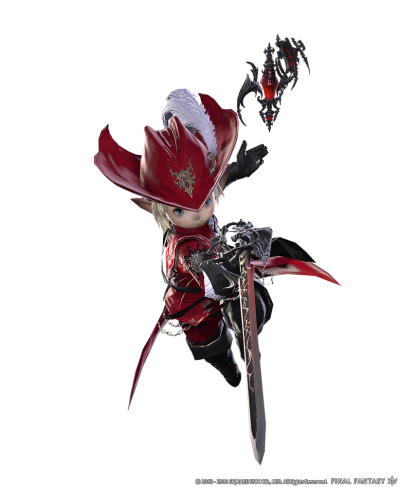
FFXIV x D&D - Red Mage as a Bard Archetype: College of Flair

This is part of a series of posts I'm making in prep for a FFXIV x D&D sourcebook I'm writing. Other related articles are:

Here's a copy of the unfinished product if you want to see it in a coherent form: https://homebrewery.naturalcrit.com/share/S1VZ0k2FN

Red Mage


Image result for red mage

The FFXIV Red Mage is a jack of all trades. It swaps between going in close with melee attacks and casting spells at a distance. It can cast healing spells as well as explosive spells, and it can buff party members as well. And it does all of this in bursts and with flair.

This description makes it pretty obvious that the Bard class should be used as the base for this concept. If we look at the basic Bard's toolkit, it does almost all of what a Red Mage does already. In fact, one could argue that you could make a College of Lore or College of Swords and call it a Red Mage, but one lacks the blade flourish aspect, and the other lacks the ability to cast flashy explosive spells, respectively.

The mission behind the Red Mage subclass (called College of Flair) is to merge the best of the College of Lore and College of Swords in a cohesive way to come up with a result that truly feels like a Red Mage.

At level 3, they gain three features. The first one is an evocation cantrip from the Wizard spell list and the ability to select evocation spells from the Wizard spell list when they learn new spells. This way, they get all the flashy spells they want, without stepping on the Wizard or Sorcerer's toes too much.

The second one is their Fighting Style; I made a new Fighting Style called "Spellslinger", which allows them to reroll their damage dice from their cantrips. This should more or less average out in a damage increase from their cantrips, similar to the +2 damage bonus from the Dueling Fighting Style.

The third and last ability they gain at level 3 is Battle Flourish, which is inspired by the College of Swords' Blade Flourish. This grants them a +2 bonus to AC when using the Attack action, effectively granting them the same bonus that a shield would, which Bards are not proficient in. The Battle Flourish options are mostly there to give the Red Mage options to swiftly get in and out of combat.

By the time the Red Mage reaches 6th level, they would have access to Font of Inspiration, which allows them to recharge their Inspiration points every short rest. This would encourage them to use their Battle Flourish abilities more often, and so it seemed fitting to give them an extra attack at this level. By now, the Red Mage should be very good at using flashy spells and entering melee combat for a short time.

An ability that seems to be a staple for Red Mages, is the ability of Dualcast, which allows them to cast two spells at once. That's why, at 14th level, I gave them the ability to cast a cantrip as a bonus action after they cast a lower level spell (4th level of lower). I felt like this was balanced because, at these levels, 4th levels spells or lower were still used and were still useful, but were nowhere near as devastating as the current 7th level spells that they could cast. Plus, the number of spells they could cast under this dualcast feature was limited. I would like to test this ability out, since it could be the case that it needs to be changed to only include 3rd levels spells or lower, or even 2nd level spells or lower. 

I'm very satisfied with how this subclass turned out, and I'm eager to see more of how it works in actual play. Perhaps in the future, I might have to make adjustments to the Dualcast feature.


Worldbuilding: Myths of Draconiquity, Part I - The Goblin King

  The Goblin King Myths of Draconiquity, Part I The origins of the archfey known as The Goblin King usually refer to his time as an old mage...